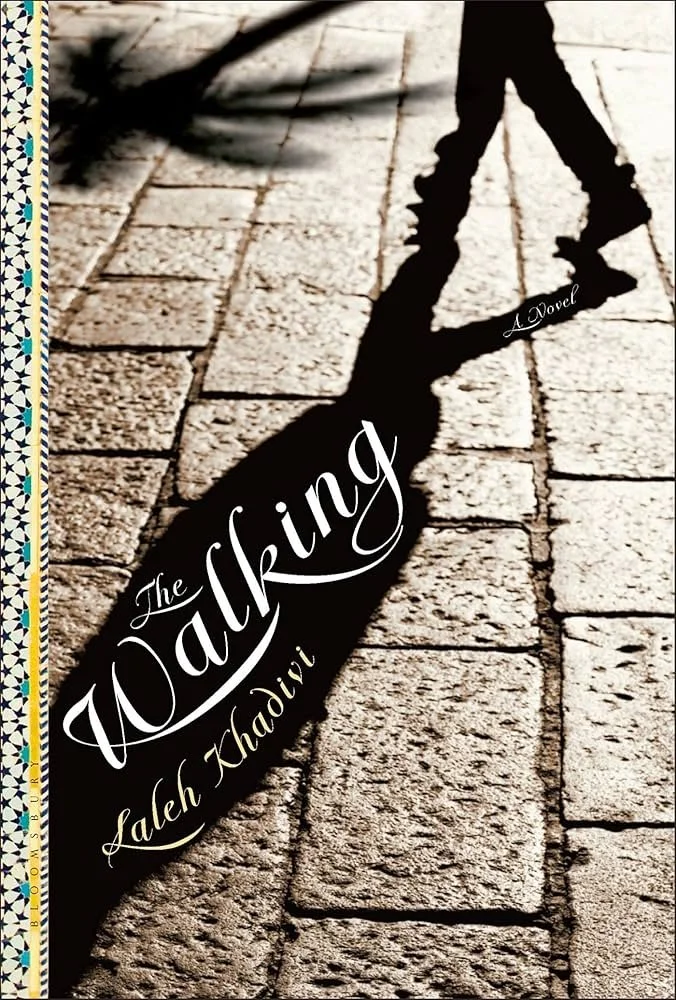
The Walking
“THE WALKING is a deliberate, nakedly passionate confrontation with [Khadivi’s] past. A successful novel needn’t set out to teach us something—to bend us morally—but the precision of Khadivi’s sentences, each with a gentle rhythm and a sure-footed intelligence, engenders deep sympathy for the miseries experienced by forced migrants.”
—NEW YORK TIMES, BOOK REVIEW
“[L]yrical and deeply emotive…THE WALKING is a book that manages to convey painful truths with a rare combination of grit and tenderness. That makes it not just an important addition to the literature of California’s immigrants, but also a universal story of suffering and resilience told with elegance and compassion.”
–HECTOR TOBAR, LATIMES BOOK REVIEW
“In great part, The Walking addresses the heart-aching conflict — a sort of inner border war — of all reluctant or accidental immigrants: To whom am I loyal? With which nation do I identify? Where do I put my memories and how do I forget injustices? The hopeful answer is always the notion that we somehow straddle both the “old home” and the “new home” without betraying either, but that’s neither easy nor easily defined, which is why a novel that explores these issues can be so helpful and enlightening.”
—SUSANNE PARI, SAN FRANCISCO CHRONICLE
“Alive and gripping… descriptions of people, places and particularly emotions are exquisite—poetry in prose—highly recommended.”
–LIBRARY JOURNAL
“Lyrical and restrained… chapters soar on oft-haunting and always precise imagery. The second of three novels brings a delicate touch to the emotional intricacies involved in both leaving one’s homeland and staying behind.”
–PUBLISHERS WEEKLY
“… deeply personal and revelatory…”
–BOOKLIST
“In a time when millions have been dislocated and relocated, [The Walking] is a beautifully worded and thoughtful tale about losing one’s home and the new ways of making a community.”
–CAPE TIMES, CAPE TOWN
“Powerfully told.”
–FINANCIAL TIMES
“In spare and elegant prose Khadivi suggests leaving home is easier than leaving the past behind.”
–SAN JOSE MERCURY NEWS
Saladin Khourdi has always known he will leave Iran. He spends his days in the cinema, dreaming of Hollywood stars in swimming pools. For his older brother, Ali, Iran is their home, their history. But both will have to leave, when the 1979 revolution leads to a killing in their mountain village. For both, there is a question of how far they will go, weighing the danger of return against the danger of continuing.
Laleh Khadivi's novel moves fluidly through time, and from the Khourdi brothers to the broader chorus of the Iranian diaspora, to create a stunning sense of a people caught between the ancient and the modern, tossed by political currents. In the story of Saladin and Ali, she explores the tension in all immigrants, the attachment to the place they must leave, and the dreams in the places they land.
It is, at last, Saladin alone who touches down in Los Angeles. He is hungry, and homeless, but he is not invisible-the city is unexpectedly heated with hate as the hostage crisis unfolds back in Iran. Los Angeles means avoiding confrontation while searching for work, counting coins and collecting sand in his shoes. But as Saladin slowly makes connections in this new place, he must determine whether home can be made anew.